
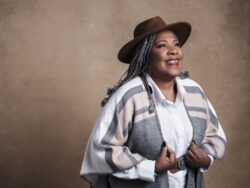
About our guest author: Melody Starya Mobley’s experiences as the first black woman serving as a forester for the USDA are remarkable: both for the firsts she embodies and for the years of abuse and oppression she experienced within that system.
Now, Melody shares her personal stories to create positive change for groups historically excluded from accessing American natural spaces.
With the few federal protections that exist currently being stripped away, it’s more important than ever for stories like these to be told. Learn more about Melody and watch her documentary The Dark White Forest on her website at starya.org.
Image credit: Kirth Bobb
I was the first Black American woman to attend and graduate from what was then the College of Forest Resources at the University of Washington in Seattle, WA. To say my race made school more difficult is a boundless understatement.
I was socially and academically isolated. Although there was a small organization for Black students that met with us before school started and once each quarter, it was of little help in day-to-day school life.
Based on my experience, I have some suggestions about what would have really helped.
1. Mentorship
First, each student should be encouraged and supported to find at least one mentor. On my own initiative (or maybe his), I found Dr. Stewart G. Pickford, a professor of fire management. Dr. Pickford, now deceased, supported me in so many ways—from taking me to purchase my first logging boots to securing my first work-study job to moving me back and forth to my summer cooperative education work location in Skykomish, WA. He felt like a long-lost uncle, advising me on everything as needed.
And, of course, Stew Pickford was White. Plus, he had clout in the College, so he could open doors otherwise closed to me. I don’t have room here to describe all the characteristics of a good mentor, but suffice it to say, they don’t have to be the same race to provide many kinds of support.
“Dr. Pickford was always there for [me] whenever there was a challenge in one of [my] classes or when [I] felt out of sorts.” — Melody Mobley (Source: Yale School of the Environment)
2. Community
Second, help the students find community with others who understand their challenges as people of color. A mentor of any kind is nice, but it does help to have a mentor of the same race who understands the interpersonal challenges of attending an all-White college as a person of color.
White students more easily establish friendships and personal relationships with other White students, and it’s easier for them to establish or join study partners or groups. People of color are often left out, so a support organization (like these available at CU Boulder) should help the student find a study partner or group for difficult classes.
A social community can also help students meet their personal needs. It was a great struggle to find a place to get my hair prepared by a professional so that I looked presentable. It was difficult to find a suitable church where I was comfortable that had other people of color; campus ministries catered to White students, the campus majority.
And transportation is often a problem. When I was in Skykomish, I had no way to get to a grocery store, church of my choosing, get my hair done, or get to any social activities like movies, concerts or plays. There was no television reception in this mountain town with fewer than 200 people.
It’s about focusing on the whole student.
These are just some of the issues facing students of color outnumbered at a White campus. Without Stew Pickford, I would almost certainly have left before finishing my forestry education—and not everyone is as fortunate as I was in finding a supportive mentor like him.
If colleges and universities are committed to increasing retention of STEM students of color, support structures must consider their whole experience as students.

Read more of Melody’s writings
on the American Green blog.